
Switzerland County Arrest Records and Charges
Switzerland County arrest records start on the law-enforcement side. They may reflect the arresting agency, booking, custody status, booking charge labels, bond information, and release status. The Sheriff's Office and jail are the local custody contacts. That record is not the same as a final court case record, and it is not proof that a person was convicted.
Court charges after arrest begin when the prosecutor files formal charges in the Switzerland Circuit Court. The court charge record then becomes part of the criminal case file and can show the cause number, offense name, statute, charge level, plea, amended or dismissed counts, disposition, sentence, and probation terms. For the full case file and outcome, use the Switzerland County criminal court records page.
The image below comes from the official Town of Vevay Police Department page.
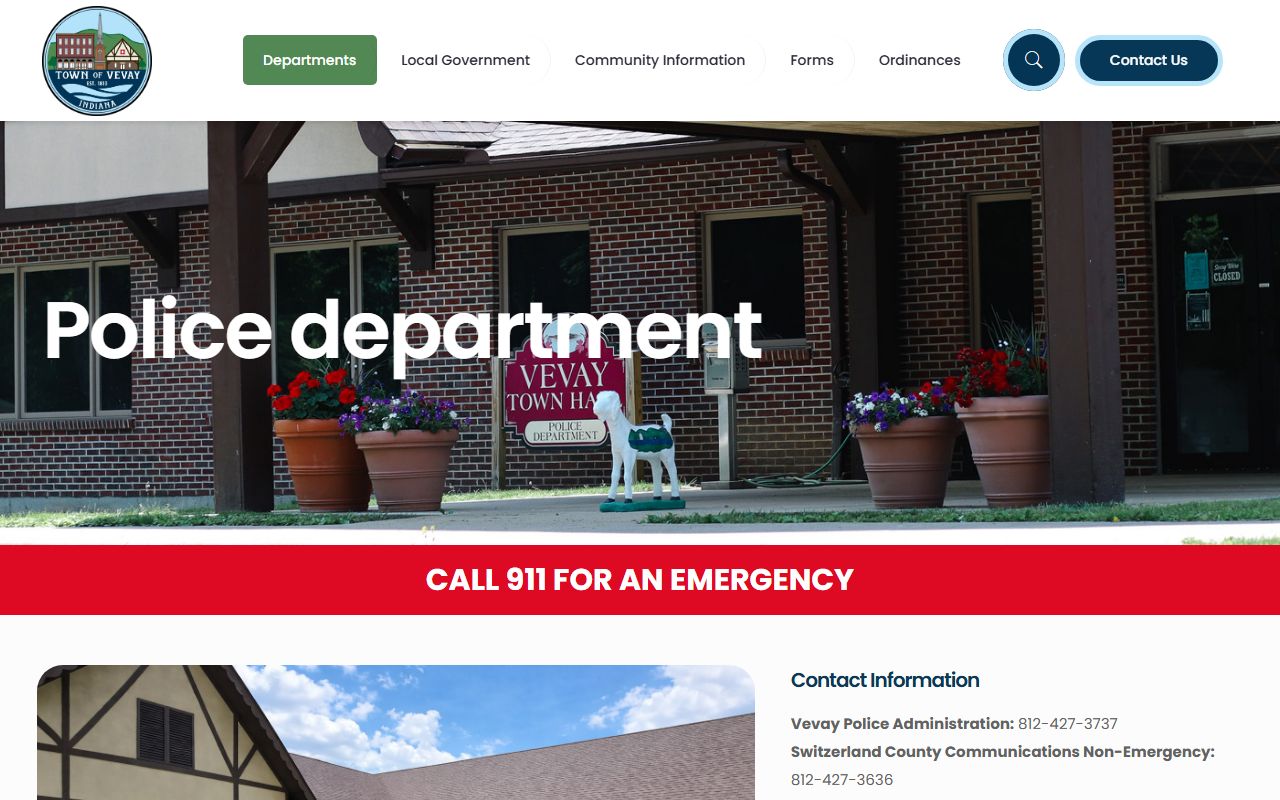
Vevay law-enforcement sources help identify the arrest side of the record, while filed charges must be checked through the court and prosecutor path.
Find Switzerland County Arrest Records and Charges
Use a two-track search. First, check custody or booking channels when the need is current arrest status. The Switzerland County Jail phone line is 812-427-2057, and the Sheriff's Office main line is 812-427-3636. Statewide jail and notification tools can help, but the research notes that Switzerland County was not listed in the INjail participating county list when checked. Indiana SAVIN remains a custody notification search channel.
- For custody, start with the jail phone line, Indiana SAVIN, and any available INjail search result.
- For filed court charges, open Indiana MyCase and search by defendant name or cause number.
- Use Switzerland County or Switzerland Circuit Court filters when available.
- Open the criminal case and read each charge count, statute, level, plea, and disposition.
- Ask the Circuit Court Clerk for certified charge, disposition, or sentencing copies when needed.
This split avoids a common mistake. A booking charge can change after prosecutor review. It may be declined, amended, reduced, replaced by a different count, or dismissed in court. The filed court charge is the better source for the formal allegation and later status.
Who Files Charges After Arrest
Indiana uses the title Prosecutor or Prosecuting Attorney. The official Switzerland County Prosecutor's Office page lists Ryan Marshall as Prosecutor and explains that the prosecuting attorney represents the State of Indiana and prosecutes violators of state statutes in courts with criminal jurisdiction. That office is the charging decision point after law enforcement makes an arrest or submits a case for review.
The prosecutor may file charges, decline charges, amend counts, reduce a charge, or dismiss a count depending on evidence and law. Once filed, the charge is tracked through the court case. The Circuit Court Clerk maintains the court record, but the prosecutor is the source of the state's formal accusation.
Switzerland County Prosecutor's Office
212 West Main Street
Vevay, IN 47043
812-427-4455
po@switzerland.in.gov
Monday-Friday, 8:00am-4:30pm; closed 12:00pm-1:00pm
Charging Documents After Arrest
A charging document is the paper or electronic filing that starts the formal court charge record. Indiana criminal cases in Switzerland County commonly use an information filed by the prosecutor. Complaints and indictments may also appear in legal discussions, but the key point for record search is the same: the court record begins with a filed accusation, not the jail booking label.
| Document | Who Files It | How It Fits the Record |
|---|---|---|
| Complaint | Law enforcement or prosecutor, depending on procedure. | Can state the alleged facts or offense basis that starts a criminal matter. |
| Information | Prosecutor. | Common formal charging document that lists filed counts and statutes. |
| Indictment | Grand jury. | Formal accusation used in more limited circumstances, usually for serious matters. |
Read the charge list count by count. One arrest can lead to several filed counts, and each count can have a separate plea, dismissal, conviction, sentence, or expungement result.
Switzerland County Charge Record Fields
MyCase and the court case summary can show the charge details that matter most after arrest. The visible fields depend on the case and access rules, but criminal case records can include the offense name, count number, statute reference, offense level, offense date, plea, finding, disposition, sentence, bond, warrant events, fines, costs, restitution, and probation conditions.
| Field | Why It Matters |
|---|---|
| Count number | Separates each filed charge within one criminal case. |
| Offense name | Names the alleged criminal offense filed in court. |
| Statute | Links the charge to Indiana criminal law. |
| Level or classification | Shows felony, misdemeanor, infraction, or other severity label where listed. |
| Plea and finding | Shows how the charge was answered and resolved. |
| Disposition | Shows the outcome for that charge, such as dismissed, guilty, or not guilty. |
| Sentence or probation | Shows court-ordered terms after conviction or plea where public. |
Charge Status After Arrest
Charge status can change as a case moves. A filed charge may be pending at the first court event, amended after review, reduced during plea negotiations, dismissed by motion or agreement, or resolved by conviction or acquittal. Indiana records may use specific docket language, so the disposition and later sentencing entries should be read together.
| Status | What It Means |
|---|---|
| Pending | The filed charge is active and no final outcome is shown yet. |
| Amended | The prosecutor or court record changed the charge wording, statute, count, or level. |
| Reduced | The charge was lowered to a less serious offense or classification. |
| Dismissed | The count ended without conviction, though the reason should be checked in the docket. |
| Disposed | The court has recorded an outcome for the case or count. |
Some states use the phrase nolle prosequi for a prosecutor's decision not to pursue a charge. The Switzerland County research did not identify a local nolle-prosequi form or rule, so use the actual docket wording shown in the case rather than assuming a label.
Charges vs Convictions
A charge is not a conviction. Switzerland County arrest records may show an allegation at booking, and the court case may show a filed charge, but neither proves guilt unless the record later shows a guilty plea, guilty finding, or verdict. This distinction is essential when comparing jail information, prosecutor filings, and court dispositions.
| Point | Charge | Conviction |
|---|---|---|
| Meaning | An allegation filed or listed after arrest. | A final guilty plea, finding, or verdict accepted by the court. |
| Where seen | Booking labels, charging document, charge list, and docket. | Disposition, judgment, sentencing order, and financial entries. |
| Can change | May be amended, reduced, dropped, or dismissed. | May be appealed, modified, or expunged if eligible. |
Jail Booking and Arrest Records
The Switzerland County Sheriff's Office is at 405 Liberty Street in Vevay. Its official site lists Sheriff Brian L. Morton, main office phone 812-427-3636, jail phone 812-427-2057, and Jail Commander Luann Schaefer. Jail records can help with current custody, bond, and booking information, but they do not replace the court charge record.
INjail Public Access is a statewide county jail offender locator for participating jails, but Switzerland County was not in the county list when checked. Indiana SAVIN can be used for offender custody search and notification by name, offender identification number, or case/cause number. Jail phone contact remains the local fallback for immediate custody questions.
- Use the jail phone for immediate custody and local booking questions.
- Use Indiana SAVIN for offender search and custody-notification functions.
- Use MyCase for filed court charges and case events.
- Use the Circuit Court Clerk for certified court copies.
Statewide Arrest and Charge Limits
Indiana has multiple statewide systems, but none should be described as a complete Switzerland County arrest-record database. MyCase searches public court case records. INjail searches participating county jail records. Indiana SAVIN supports custody notification. Indiana DOC is for state-prison inmates. The BMV holds driver records. Each system answers a different question.
For court charges after arrest, MyCase and the Circuit Court Clerk are the better route. For current custody, the jail and SAVIN are better. For a formal criminal history or background check, use authorized criminal-history channels and comply with applicable law. Public court lookup is not the same as an FCRA-compliant consumer report.
Important: Do not treat a booking label or filed charge as a conviction without reading the final disposition.
Restricted Arrest Records and Charges
Indiana law limits public access to juvenile records, adoption files, sealed records, expunged records, confidential addresses, medical information, social security numbers, full dates of birth, account numbers, and other protected material. Juvenile law-enforcement and juvenile court records are generally confidential except where statutes allow access. A public adult charge record may still hide some fields or documents.
Expungement under IC 35-38-9 can apply to eligible arrest-only, dismissed, acquitted, charge, and conviction records, but the rules differ by outcome and offense level. A person usually petitions the court with jurisdiction over the record, identifies eligible records, serves required parties such as the prosecutor when required, and waits for a court order. The clerk can process filings, but cannot give legal advice.
The image below comes from Indiana Code Title 31.
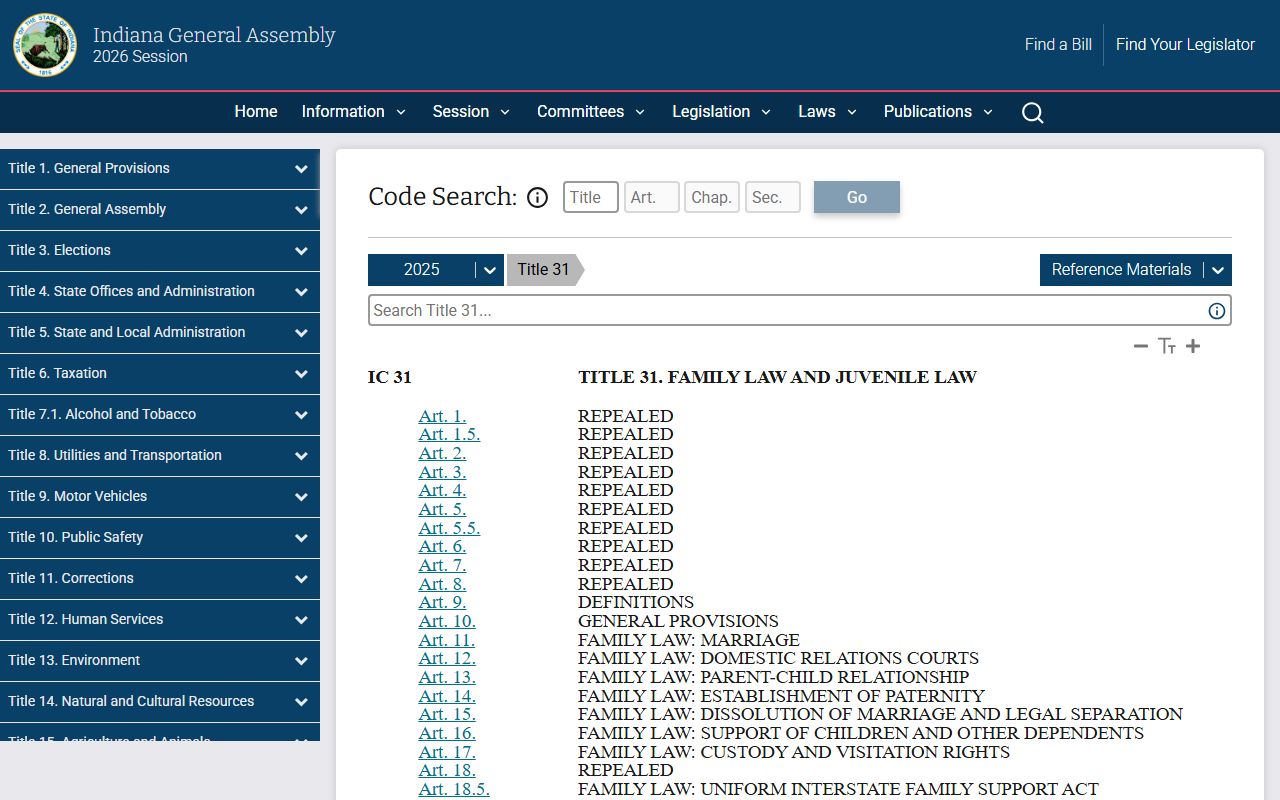
Title 31 is relevant because juvenile records are one of the main categories that should not be described as ordinary public arrest records or public court charge records.
Sealed vs Expunged Charge Records
Sealing and expungement both limit public access, but the legal basis and effect depend on the order. A sealed or restricted charge may remain available to authorized court, law-enforcement, or criminal-justice users. An expungement order under Indiana law can reduce or remove public access to eligible arrest, charge, or conviction information as the statute and court order allow.
| Point | Sealed or restricted | Expunged |
|---|---|---|
| Public search | Public access is limited by rule, statute, or court order. | Public display is limited as the expungement order directs. |
| Record still exists | Yes, but access is controlled. | Yes for authorized purposes in many contexts, even if public access is limited. |
| Common triggers | Juvenile status, protected data, confidential case type, or court order. | Eligible arrest, dismissal, acquittal, charge, or conviction after statutory requirements are met. |